
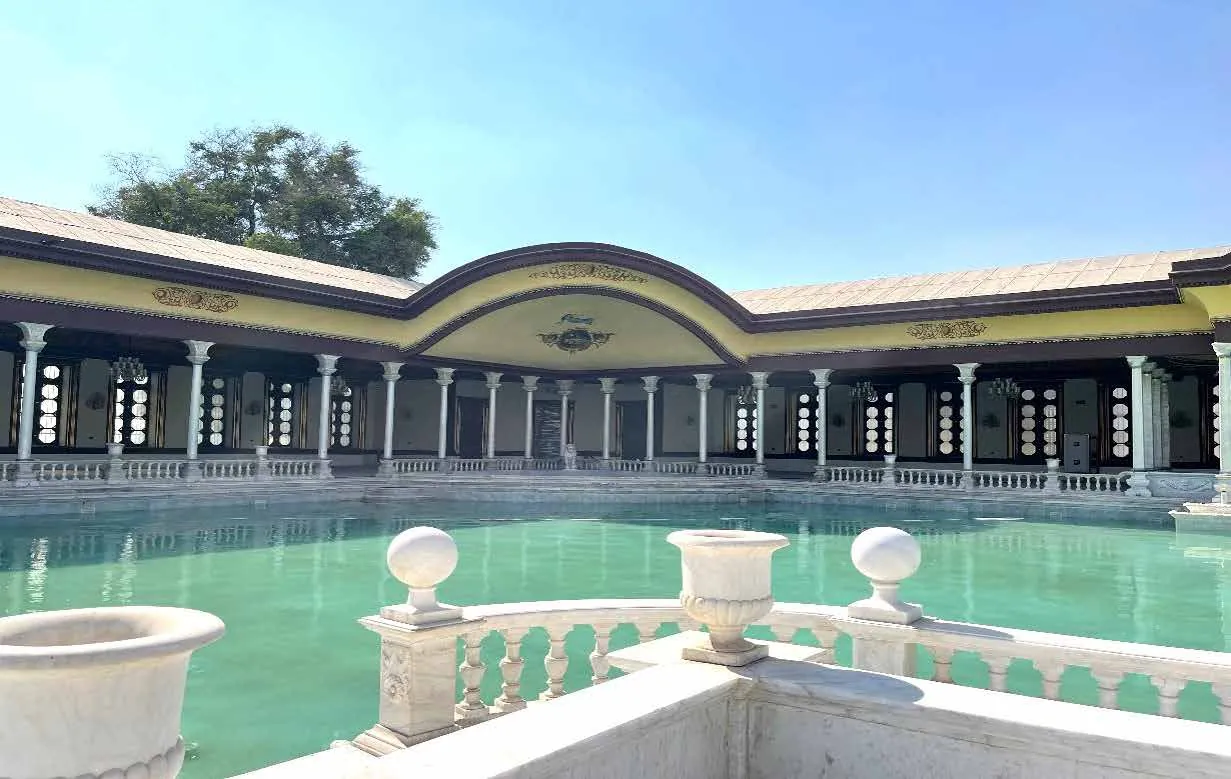
Muhammad Ali Palace, Shubra
The palace of Muhammad Ali Pasha (1805–1848), founder of modern Egypt, is a rare architectural masterpiece in which art, architecture and nature converge. It combined the European approach to ornament with the spirit of Islamic architecture in its planning.
Construction began in 1808 when Muhammad Ali established the Shubra suburb, then the northern promenade of Cairo, and was completed in 1821. The palace extends over 50 feddans overlooking the Nile.
Its design rests on a vast garden containing a group of buildings enclosed by a substantial wall. It is distinguished by oil paintings in the Italian and French manner of the nineteenth century, and by being the first building in Egypt to receive modern lighting systems. Following the 2005 restoration and given its historical and artistic value, the Ministry of Tourism and Antiquities carried out maintenance and upgrading in 2018 covering floors, walls, the lake, and the restoration of inscriptions and ornament, along with connecting the palace to the Nile pier for visitor access.